







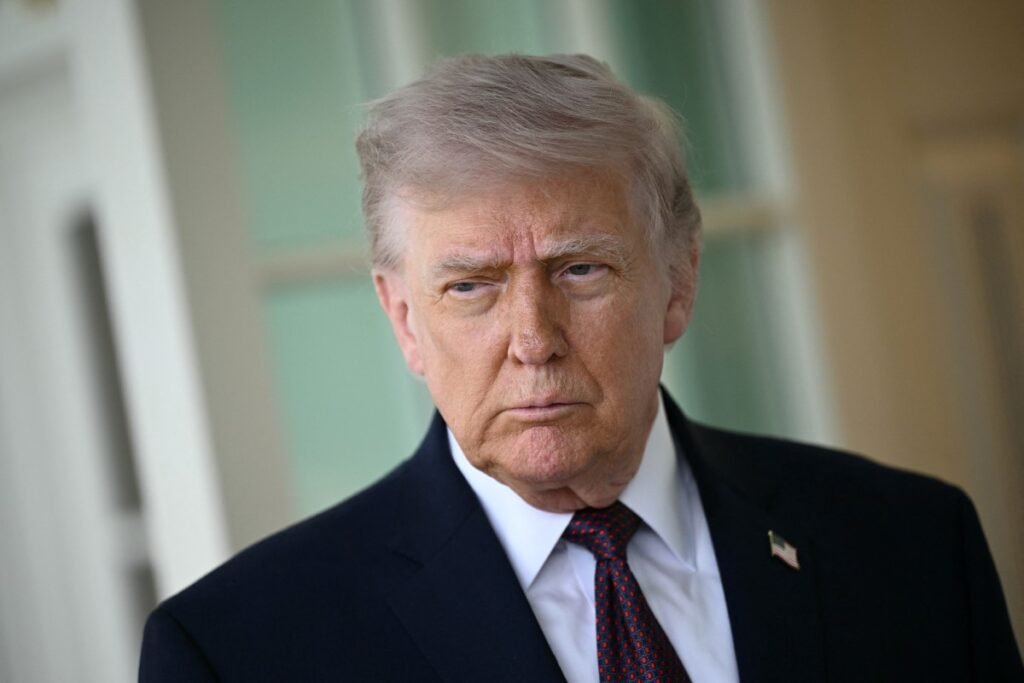
Trump Secures Major Immigration Victory As Senate Passes $70bn ICE Funding Bill
The United States Senate on Friday approved a massive $70 billion funding package aimed at strengthening former President Donald Trump’s hardline immigration enforcement agenda, handing the Republican leader a major legislative victory on one of his signature political issues.
The bill, which provides funding for Immigration and Customs Enforcement and the US Border Patrol through the remainder of Trump’s current term, was passed after an intense day of negotiations and amendment votes that exposed growing divisions within the Republican Party over several controversial policy proposals tied to the president.
The legislation will now proceed to the House of Representatives, where Republican leaders are expected to push for swift approval early next week before sending it to Trump for final assent.
The funding package comes months after a record partial shutdown of the Department of Homeland Security earlier this year, triggered by disagreements between Republicans and Democrats over immigration enforcement policies.
Democrats had refused to support additional funding for immigration agencies unless restrictions were placed on enforcement tactics, including immigration raids in sensitive areas such as schools and places of worship, as well as the use of face masks by officers during operations.
Republicans rejected those conditions and instead opted to use the fast-track “budget reconciliation” process to secure the funding.
The reconciliation process allows lawmakers to bypass Democratic opposition in the Senate, provided Republicans maintain sufficient internal unity to pass the legislation with a simple majority vote.
Friday’s vote followed a prolonged amendment session commonly referred to in Washington political circles as a “vote-a-rama,” a marathon process that allows senators to propose and vote on politically sensitive amendments before final passage of major bills.
While the immigration funding bill ultimately passed, the lengthy proceedings highlighted growing unease among some Republicans regarding several controversial initiatives associated with Trump’s broader political agenda.
Among the issues that sparked internal resistance was a proposed $1.8 billion “anti-weaponization” compensation fund backed by Trump allies.
Critics argued that the fund could effectively serve as a financial “slush fund” for individuals who claimed they were unfairly targeted by government investigations, including some people convicted over the January 6, 2021 attack on the US Capitol.
The controversy delayed the immigration bill for several weeks as Republican senators debated whether the proposal should remain attached to the legislation.
Acting Attorney General Todd Blanche reportedly informed lawmakers earlier this week that the administration would no longer proceed with the compensation fund.
However, Trump later appeared to create uncertainty around the issue after publicly praising the proposal and suggesting that its status remained unclear.
“That fund is beautiful,” Trump reportedly said, adding that he would need to “ask the lawyers” whether the initiative had been permanently cancelled or merely paused.
The comments intensified concerns among some Republican lawmakers who feared the political implications of defending such proposals ahead of the upcoming midterm elections.
North Carolina Senator Thom Tillis was among Republican lawmakers who openly criticized the proposal and supported efforts to formally eliminate it from the legislation.
“When you’re explaining, you’re losing. There’s no way to explain the $1.776 billion fund. So the only way you can explain it is explain that you got rid of it,” Tillis told reporters.
The amendment process also brought renewed attention to other controversial spending proposals linked to Trump’s administration, including plans for a $1 billion security allocation connected to a proposed White House ballroom project.
Although the final immigration funding bill reportedly excluded the ballroom funding, the issue became symbolic of broader Republican concerns over politically sensitive expenditures tied to Trump’s agenda.
The amendment marathon also revealed cracks within Republican ranks as several party members broke with leadership on measures involving the anti-weaponization fund, future ballroom funding and Trump’s appointment decisions within the intelligence community.
Democrats, meanwhile, used the debate to argue that Republicans were prioritizing immigration enforcement and deportation policies over pressing economic concerns facing ordinary Americans.
Several Democratic senators proposed amendments seeking to redirect portions of the immigration funding toward housing assistance, affordability measures and other domestic economic priorities.
In a separate development viewed by analysts as another sign of Republican divisions, some Republican lawmakers joined Democrats in supporting efforts to impose additional sanctions on Russia over its invasion of Ukraine and provide $8 billion in military financing loans to Kyiv.
Republican leaders defended the immigration funding package by arguing that the earlier Department of Homeland Security shutdown had left immigration enforcement agencies underfunded and operationally vulnerable.
The previous stopgap spending measure had temporarily funded major Homeland Security agencies including the Federal Emergency Management Agency, the Coast Guard, the Transportation Security Administration and the Secret Service through September 30.
However, Immigration and Customs Enforcement and the Border Patrol had been excluded from that arrangement, setting the stage for the separate funding battle resolved by Friday’s Senate vote.
Political analysts say the outcome represents a major legislative success for Trump on immigration, an issue that has remained central to his political identity and support base.
At the same time, the debate exposed ongoing tensions within the Republican Party as lawmakers attempt to balance loyalty to Trump with concerns about how some of his more controversial proposals could affect voter perceptions ahead of future elections.
Observers believe the House vote next week will be closely watched as another test of Republican unity and Trump’s continuing influence over the party’s legislative agenda.