







New N1,600 Per Litre Diesel Rate Raises Hopes for Lower Fuel Costs and Economic Relief
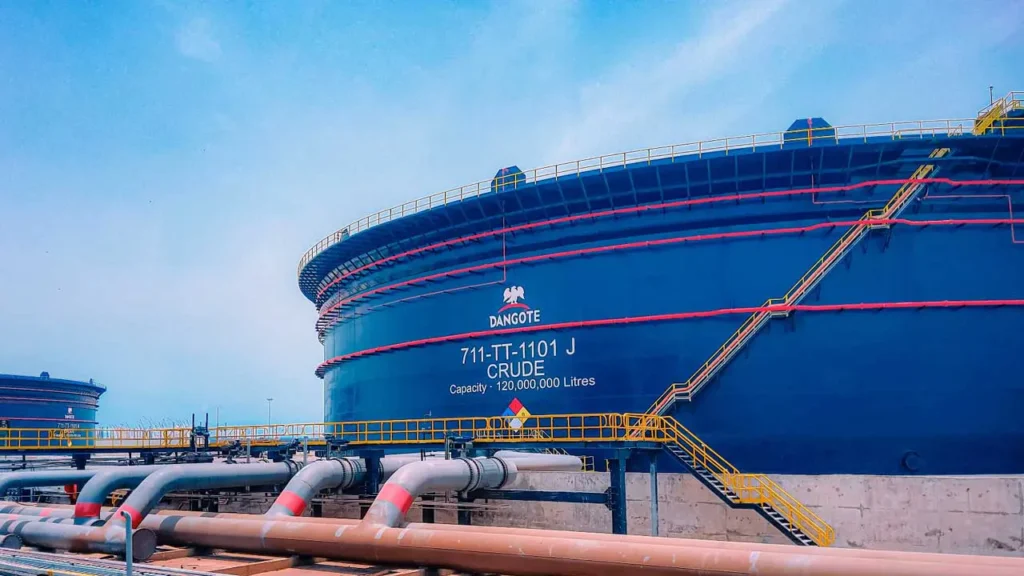
Dangote Refinery has reduced the gantry price of automotive gas oil, popularly known as diesel, from N1,800 to N1,600 per litre, offering fresh hope of lower fuel costs and possible economic relief for businesses and consumers across Nigeria.
The latest adjustment represents a reduction of N200 per litre, equivalent to about 11.76 per cent, and is expected to significantly impact retail diesel prices nationwide in the coming days.
The spokesperson of the Independent Petroleum Marketers Association of Nigeria (IPMAN), Chinedu Ukadike, confirmed the development on Thursday, noting that the reduction would likely influence pump prices and ease the burden on transporters, manufacturers and other diesel-dependent sectors of the economy.
The 650,000-barrel-per-day Dangote Refinery has continued to play a major role in Nigeria’s downstream petroleum market since it commenced domestic fuel supply operations, with stakeholders closely monitoring its pricing decisions and supply capacity.
Industry analysts say the latest diesel price cut could trigger downward adjustments in transportation fares, production costs and prices of goods and services, especially as diesel remains one of the most widely used fuels in Nigeria’s industrial and commercial sectors.
Before the reduction, diesel prices at retail outlets across several parts of the country ranged between N1,800 and N2,000 per litre depending on location, logistics and distribution costs.
Many businesses, factories, transport operators and small-scale enterprises have struggled with high diesel costs over the past year, leading to increased operating expenses and higher prices for consumers.
Economic observers believe the latest development may provide temporary relief to companies that rely heavily on diesel-powered generators due to unstable electricity supply across the country.
Manufacturers and transport operators have repeatedly raised concerns over the impact of rising diesel prices on production costs, distribution networks and inflation.
The reduction by Dangote Refinery is also being interpreted by market observers as a possible signal that petrol prices could witness similar downward adjustments if global energy prices stabilize in the coming weeks.
At present, petrol prices in Abuja and surrounding areas reportedly range between N1,350 and N1,365 per litre across many filling stations.
The fluctuations in domestic petroleum prices have largely been linked to instability in the international oil market, particularly following escalating tensions in the Middle East since February 28, 2026.
The ongoing conflict involving Iran, the United States and Israel has continued to create uncertainty in global energy markets, affecting crude oil prices and supply expectations worldwide.
Checks on international oil benchmarks on Thursday morning showed that Brent crude traded around $95 per barrel while West Texas Intermediate crude stood near $90 per barrel.
Analysts say the sustained rise in crude oil prices has placed pressure on global fuel markets and contributed to volatility in petroleum product pricing in several countries, including Nigeria.
Despite the international market uncertainties, Dangote Refinery’s decision to reduce diesel prices has been welcomed by many stakeholders who see it as a positive step towards stabilizing the domestic energy market.
Experts also believe the refinery’s increasing influence in local fuel supply could help reduce Nigeria’s dependence on imported refined petroleum products over time.
Since the removal of fuel subsidy and the deregulation of the downstream sector, Nigerians have faced persistent increases in fuel prices, leading to higher transportation costs and inflationary pressures across the economy.
The rising cost of diesel in particular has severely affected industries, private businesses, hospitals, schools and telecommunications companies that rely on generators to supplement inadequate electricity supply.
Transport operators have also repeatedly complained about the impact of high diesel costs on logistics and passenger transport services, with many operators transferring the burden to consumers through increased fares.
Economic analysts say any sustained reduction in diesel prices could positively influence inflation and help lower the cost of moving goods and services across the country.
Stakeholders in the petroleum sector have further noted that increased domestic refining capacity may gradually improve fuel availability and pricing stability if production and supply chains remain consistent.
The Dangote Refinery, regarded as Africa’s largest single-train refinery, has remained central to discussions surrounding Nigeria’s energy security and economic reforms.
Observers believe the refinery’s operations could reshape competition within the downstream oil sector and influence pricing patterns in the local petroleum market.
However, experts caution that global oil market volatility, foreign exchange instability and geopolitical tensions may continue to affect domestic fuel prices despite local refining improvements.
The development comes amid ongoing efforts by the Federal Government and industry stakeholders to strengthen Nigeria’s refining capacity and reduce dependence on imported petroleum products.
Many Nigerians are now watching closely to see whether the diesel price cut will translate into lower transportation costs, reduced inflationary pressure and eventual reductions in petrol prices nationwide.
Industry operators say the coming weeks will determine the broader economic impact of the latest price adjustment and whether other petroleum marketers will follow similar pricing patterns.